
 EN
EN  ES
ES  FR
FR  DE
DE  PT
PT 
- All Events
Threads of Silver & Gold

-
Open to the public Saturday, May 23, 2026 – Sunday, September 20, 2026
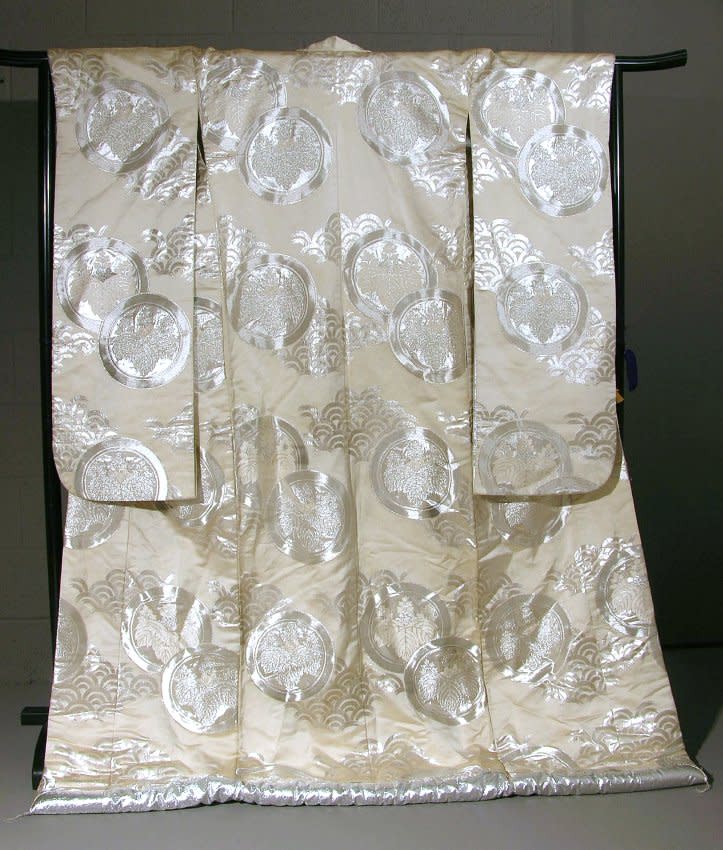
Uchikake date to the Edo period (1603-1868) when high ranking women wore them at court and were once exclusively limited to brides in samurai families. As their color and style indicated social rank, uchikake came to be seen as a status symbol. Over time, ordinary people adopted uchikake as the garment of choice for weddings, often believed to be one of the most important events in a woman’s life. This allowed the bride’s family to display their wealth and tastes in fashion. Uchikake silk is made through various special weaving techniques to create raised figures such as birds and flowers.
The uchikake, with its thickly padded hem, is meant to trail along the floor behind the bride so it is typically longer than the bride is tall. As the bride walks with slow and deliberate steps, she keeps the hem of the uchikake lifted. Uchikake, despite being overgarments, are seldom worn out-of-doors, but are restricted to the raised floors of residential interiors where outdoor footwear are removed before entering. Unlike kimono, the uchikake is not worn with a belt (obi), but is intended to be worn over the bride’s outfit. Due to the intricate layering of robes and the difficulty in moving while wearing an uchikake, attendants are usually required to help the bride dress and move from one location to another.
While the uchikake is best known as formal wear for Japanese weddings, they can be found on stage in Kabuki or Noh theater as well as worn by high-ranking geisha. Older uchikake, especially those with tears or stains, are sometimes disassembled and remade into ornate handbags, fashionable wraps, or decorative pieces.
The colors, designs and motifs seen in uchikake are often symbolic representations for good fortune and health for the new bride. Several of the common symbols such as cranes, turtles, cherry blossoms, and more can be seen in this exhibition.
This exhibition is made possible with the support from Herni & Tomoye Takahashi Charitable Foundation and the E. Rhodes and Leona B. Carpenter Foundation. The garments in this exhibition are from the Morikami Museum Collection.
Discover Your Surroundings
Hours


Plan Your Stay
Browse lodging options in the one, the only, the Palm Beaches and discover America's First Resort Destination in sunny South Florida.
Unlock Inspiring Adventures
Get the best ideas for things to do in The Palm Beaches right to your inbox!
Your Ultimate Travel Guide
Check out our visitor guide and start planning your ultimate getaway!